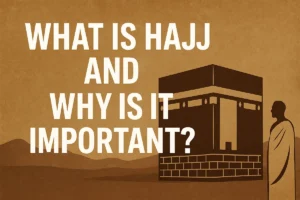

Explore the key rituals of Hajj and their deep spiritual meanings, connecting believers to Ibrahim’s legacy and divine guidance.
A Journey of Faith, Unity, and Devotion to Allah.
The rituals of Hajj are a sequence of sacred acts that symbolize devotion, sacrifice, and remembrance of Allah. Each step carries deep spiritual meaning rooted in the lives of Prophet Ibrahim (Abraham), Hajar, and Prophet Muhammad (PBUH). These rituals are performed in a specific order during Dhul-Hijjah and are designed to purify the heart, strengthen faith, and unify the Ummah.
The journey begins with entering ihram, a state of purity represented by simple white garments. Pilgrims then perform Tawaf, circling the Kaaba as a symbol of devotion. Sa’i, the walking between Safa and Marwah, honors the perseverance of Hajar and teaches trust in Allah’s mercy.
Standing on the plains of Arafat is considered the climax of Hajj. Here, pilgrims pray, repent, and seek forgiveness, reflecting on their lives and their relationship with Allah. The rituals continue with Muzdalifah, the stoning of the Jamarat in Mina, and finally, the sacrifice of an animal — symbolizing obedience and gratitude.
Each ritual reinforces humility, patience, and gratitude. Together, they guide the believer on a transformative journey that renews the soul and strengthens the bond with Allah, making Hajj one of the most profound acts of worship in Islam.
We use cookies to improve your experience. By clicking "Accept" you consent to the use of cookies as described in our Cookie Policy.