
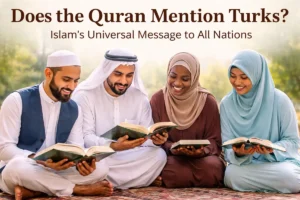
Does the Quran Mention Turks? A Clear Islamic Perspective
Islam does not belong to one nation. It speaks to every people, every culture, and every generation.
Learn how Muslim identity is shaped by faith, values, culture, and spiritual commitment in today’s diverse global world.
Islam does not belong to one nation. It speaks to every people, every culture, and every generation.

Faith shapes identity, but diversity enriches it.
Muslim identity is a dynamic blend of faith, values, and personal commitment to Allah. It is not defined by geography or culture but by belief in the oneness of God, following the Qur’an, and living according to Islamic principles. In today’s global world, Muslim identity continues to evolve while remaining rooted in timeless spiritual foundations.
Central to Muslim identity are values such as compassion, justice, honesty, and humility. These values guide personal behavior and strengthen relationships within families and communities. Practices like prayer, fasting, charity, and remembrance of Allah serve as daily reminders of one’s purpose and responsibilities.
Despite cultural diversity, Muslims across the world share a common spiritual connection. This unity is especially visible during global acts of worship such as Hajj or Ramadan. At the same time, Muslims often navigate complex social challenges, balancing faith with modern life while maintaining integrity and devotion.
Muslim identity is ultimately a journey — one that encourages self-reflection, spiritual growth, and sincere effort to live according to divine guidance. It empowers individuals to contribute positively to society while strengthening their connection with Allah.
We use cookies to improve your experience. By clicking "Accept" you consent to the use of cookies as described in our Cookie Policy.